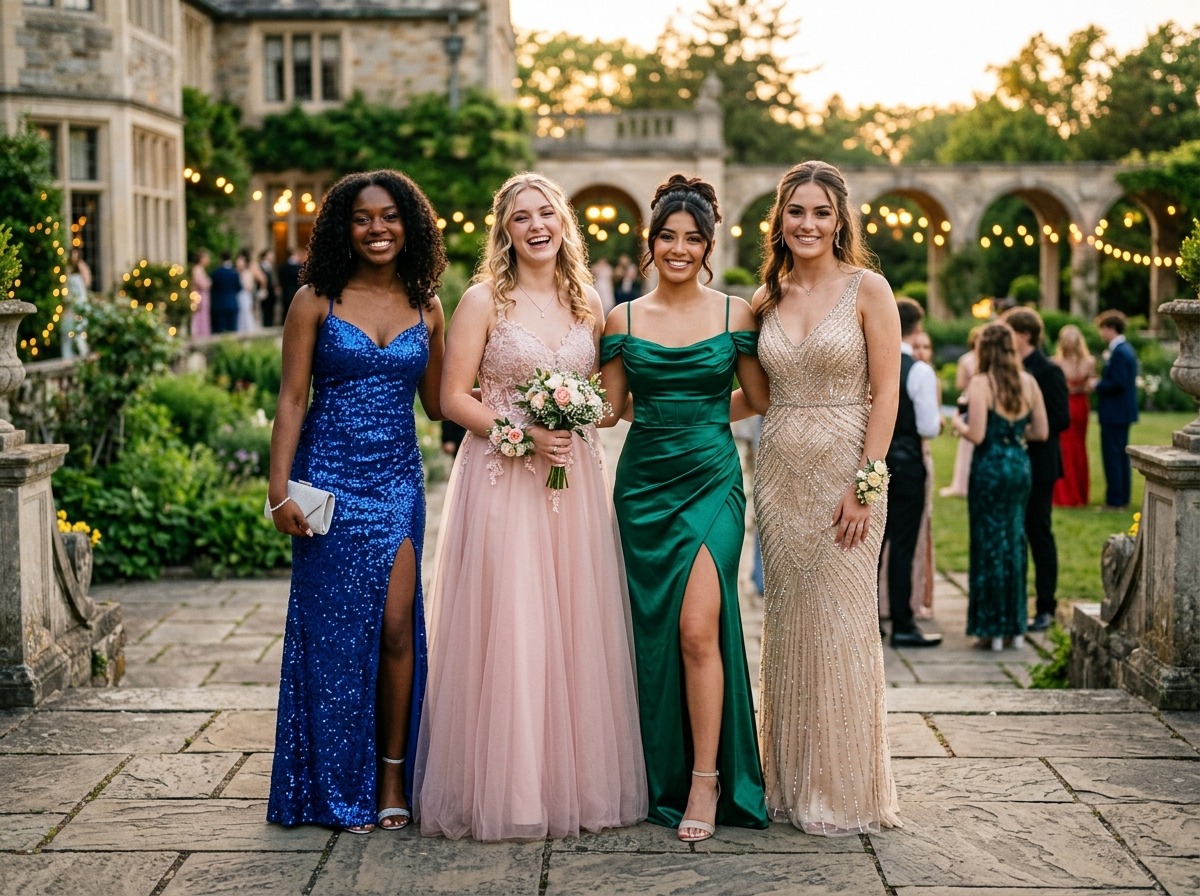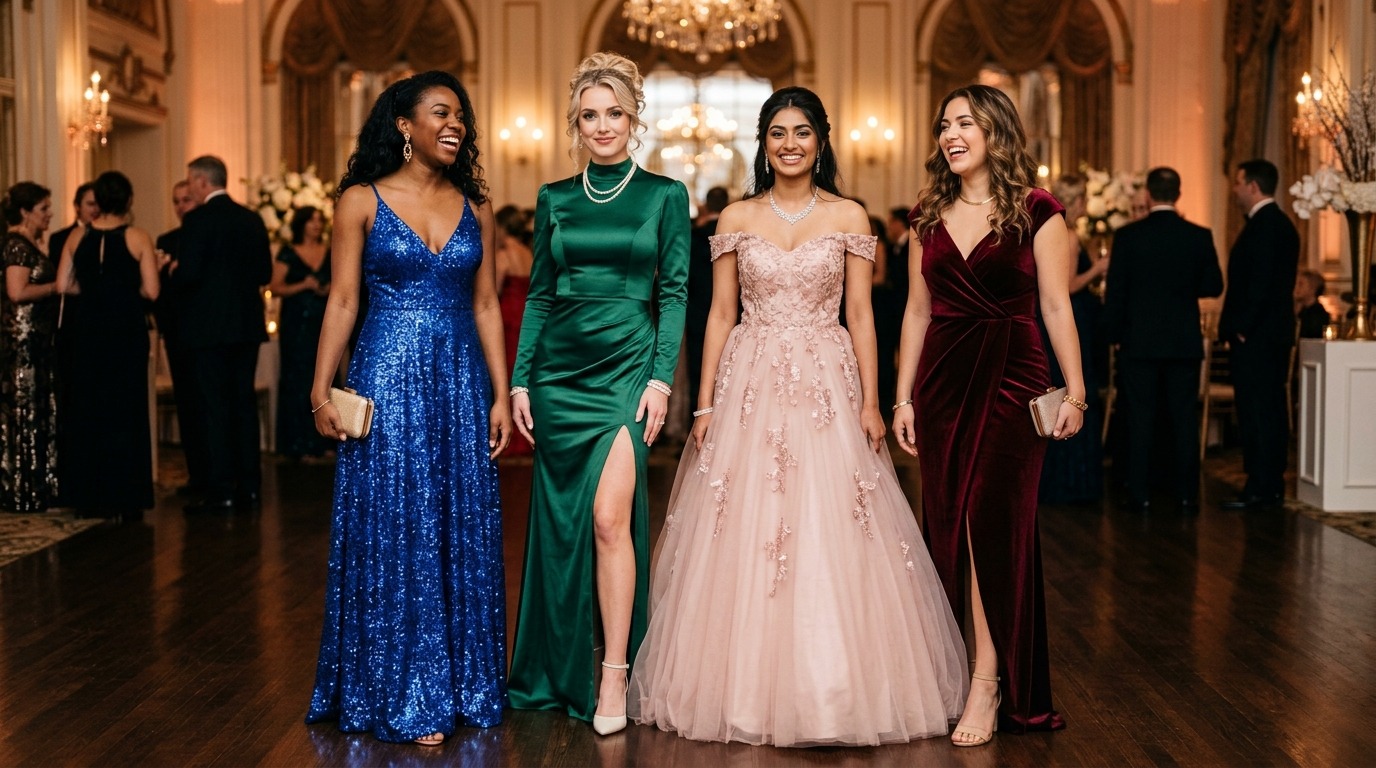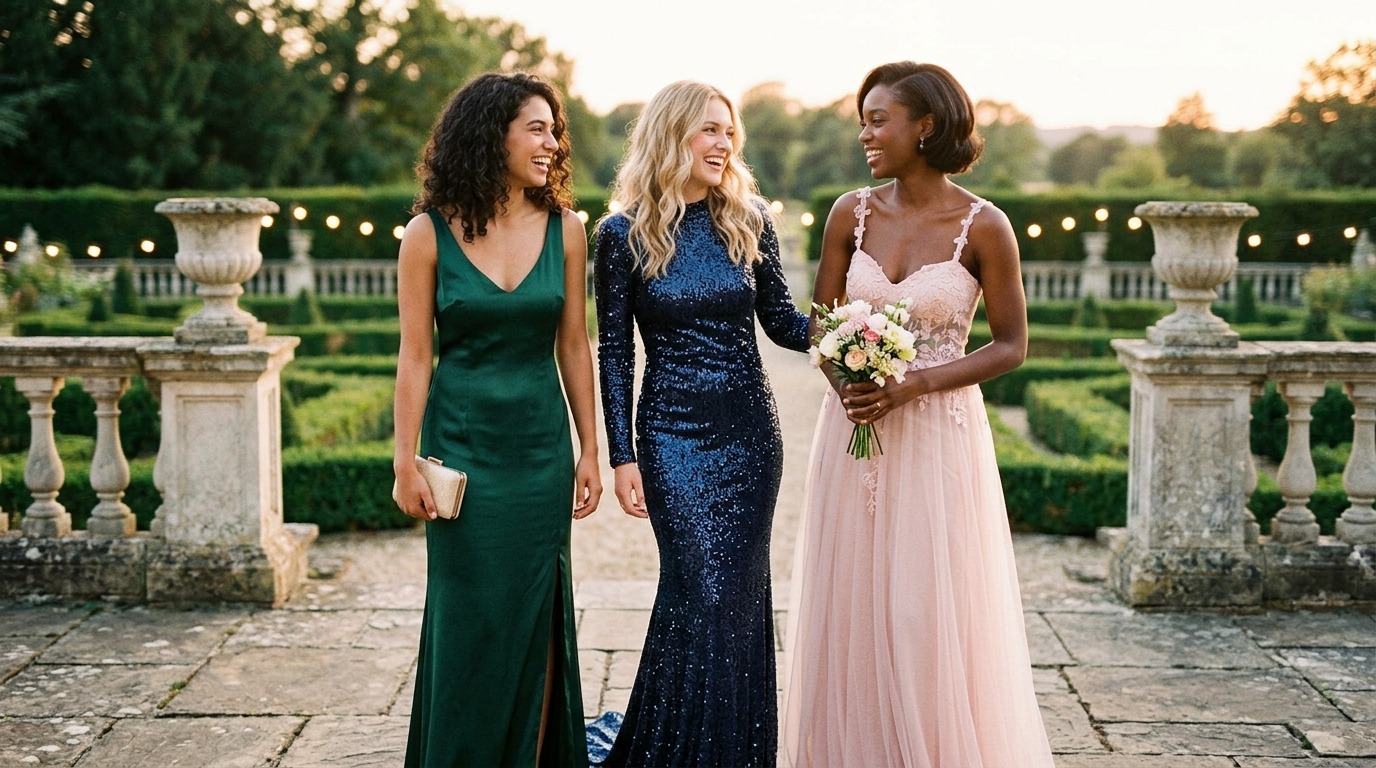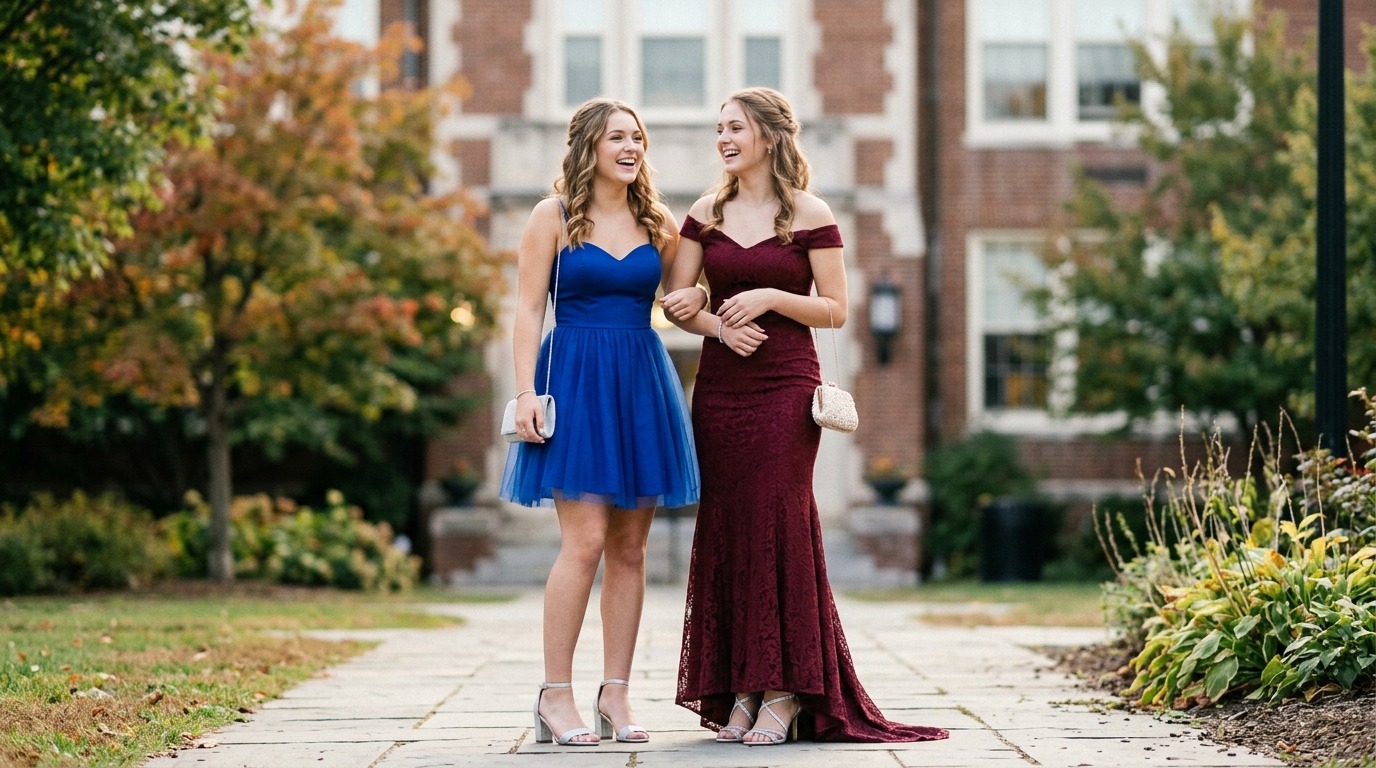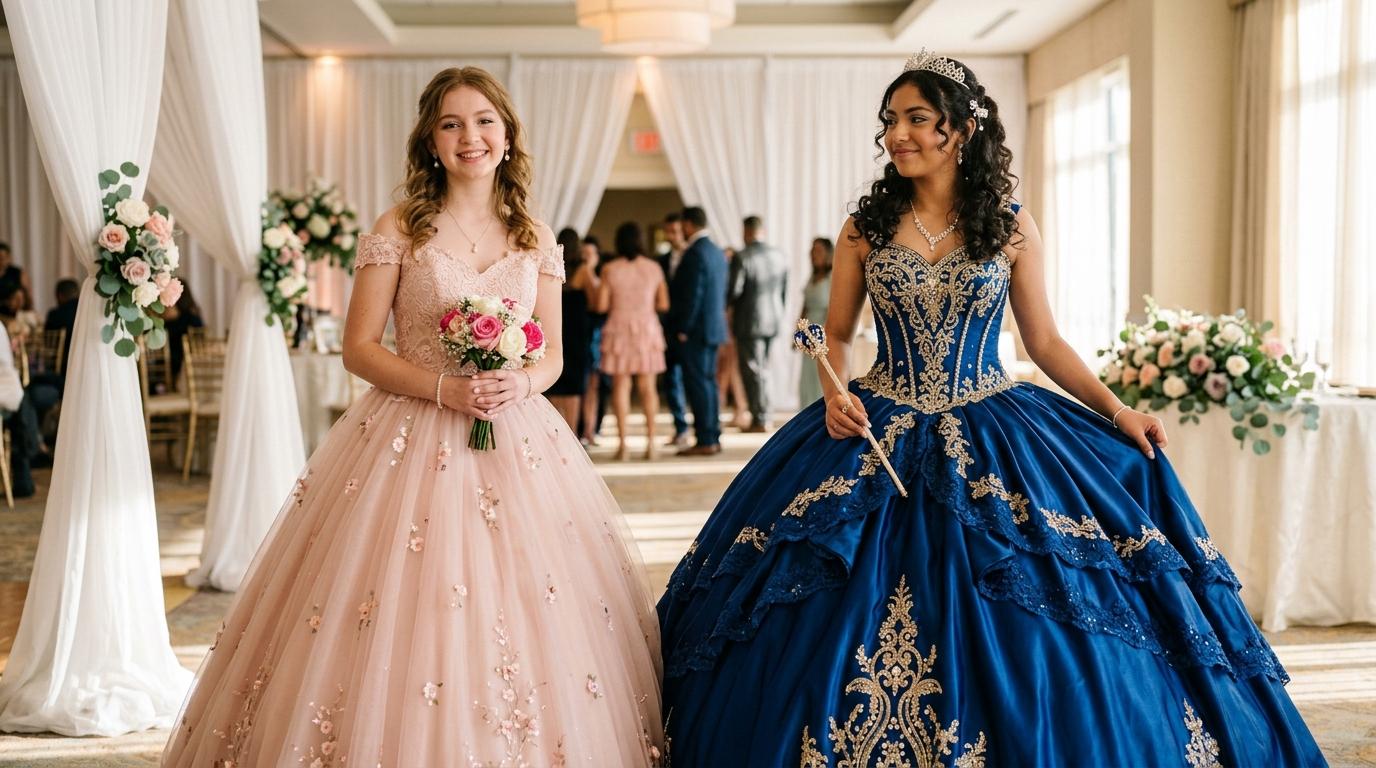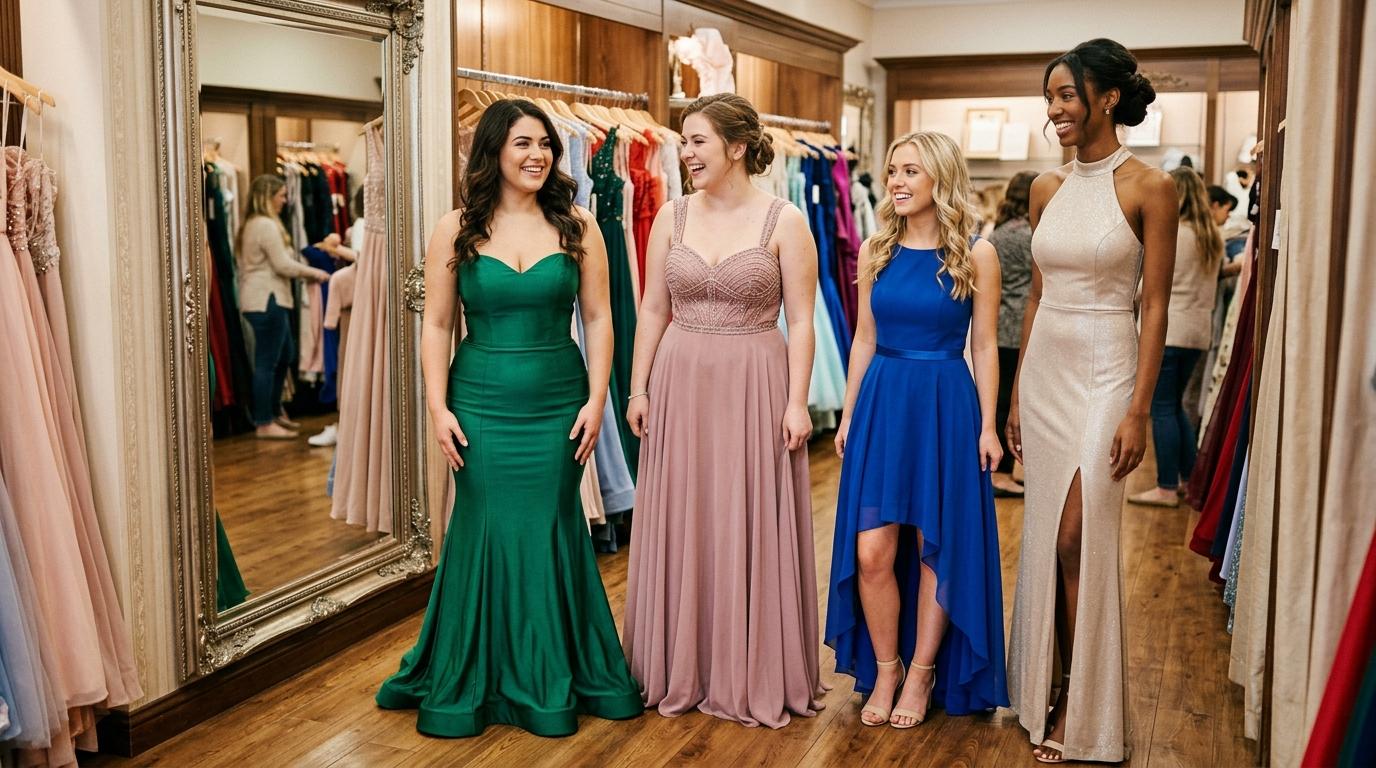
Choosing the right prom dress for your body type is one of the easiest ways to feel comfortable, confident, and beautiful on the night. The best dress isn't about chasing trends — it's about finding a style that highlights your favorite features and fits you well. Understanding your shape narrows the options and lets you shop with confidence, whether you love classic gowns, modern silhouettes, or something that sparkles.
Why your body type matters
Every body is unique. Two people can wear the same dress in the same size and get completely different results, because proportions vary. Instead of squeezing into a trend, choose a style that complements your natural shape. A well-fitted dress balances your proportions, highlights your best features, keeps you comfortable all night, and looks better in every photo and on the dance floor.
Professional stylists focus on proportion, not size. The goal is balance — not changing how you look.
How to identify your body shape
Before shopping, take a few quick measurements of your shoulders, bust, waist, and hips. Comparing them makes your shape easy to spot. Most people fall into one of five types — though many blend two, which is completely normal.
- Hourglass — balanced shoulders and hips with a defined waist.
- Pear — narrower shoulders, fuller hips.
- Apple — fullness through the midsection, slimmer legs.
- Rectangle — shoulders, waist, and hips fall in a similar line.
- Inverted triangle — broader shoulders, narrower hips.
Best styles for an hourglass figure
With balanced shoulders and hips and a naturally defined waist, your aim is to show off those proportions rather than hide your waistline.
- Mermaid silhouettes — follow your curves before flaring below the knee for a glamorous finish.
- Fit-and-flare — hugs the waist while letting you move easily.
- Wrap-style dresses — naturally define the waist and flatter your frame.
- Sweetheart necklines — enhance the upper body without overwhelming it.
Reach for fabrics that drape rather than add bulk — satin, stretch jersey, crepe, or soft velvet. Skip boxy cuts that hide your waist.
Best styles for a pear-shaped body
With narrower shoulders and fuller hips, the goal is to balance your upper and lower half by drawing the eye upward.
- A-line dresses — flow gently over the hips while defining the waist.
- Ball gowns — add volume evenly for balanced proportions.
- Off-the-shoulder necklines — widen the shoulders and lift attention up.
- Embellished bodices — sequins, lace, or beading pull focus to the top half.
Look for structured bodices, defined waistlines, and flowing skirts. Keep heavy detailing near the neckline rather than the hips, where it can add unwanted volume.
Best styles for an apple-shaped body
Carrying more fullness through the midsection with slimmer legs, your aim is to create waist definition and highlight your other features.
- Empire waist — sits just below the bust and flows over the midsection.
- A-line — a versatile choice for a balanced look.
- V-neckline — create a long, flattering vertical line.
- Chiffon — skims over the body instead of clinging.
Three-quarter or flutter sleeves add elegance while keeping balance. If comfort is a priority, avoid anything tight around the waist.
Best styles for a rectangle shape
With shoulders, waist, and hips in a similar line, your styling goal is to create curves and define the waist.
- Fit-and-flare — builds the appearance of curves.
- Peplum details — add dimension at the waist.
- Layered skirts — bring movement and volume.
- Ruched bodices — add interest while defining the midsection.
Sweetheart, halter, scoop, and one-shoulder necklines all add dimension and visual balance.
Best styles for an inverted triangle
With shoulders broader than your hips, aim to add balance below the waist.
- A-line dresses — a fuller skirt balances broader shoulders.
- Ball gowns — distribute volume evenly top to bottom.
- Flowing chiffon or tulle skirts — add graceful movement below the waist.
- Minimal shoulder details — simple straps keep focus off the shoulders.
For a softer look, skip oversized sleeves and heavy embellishment across the shoulders.
Choosing the right neckline
The neckline can transform a dress without changing its silhouette at all.
- Sweetheart — ideal for hourglass, rectangle, and pear shapes.
- V-neck — best for apple shapes, fuller busts, and petite frames.
- Off-the-shoulder — great for pear and rectangle shapes.
- Halter — works well for athletic builds and taller frames.
Choosing the right fabric
Fabric shapes both comfort and appearance, so notice how it feels after you walk, sit, and dance.
- Satin — a luxurious, smooth finish; ideal for mermaid and fitted gowns.
- Chiffon — light and flowing; perfect for A-line and empire styles.
- Tulle — adds volume without weight; made for ball gowns and princess looks.
- Stretch jersey — comfortable and flexible for fitted designs.
- Velvet — elegant for cooler seasons and evening events.
Best colors for your skin tone
Color matters as much as silhouette. Use these as a starting point, then test shades under natural light before deciding.
Fair skin
Jewel tones give crisp, rich contrast: emerald green, navy blue, burgundy, royal blue.
Medium skin
Soft and vivid shades both flatter: coral, lavender, sapphire, plum.
Olive skin
Warm, earthy tones bring out a glow: teal, gold, deep red, forest green.
Deep skin
Bright and metallic shades create stunning contrast: bright yellow, white, cobalt blue, fuchsia, metallic silver.
How to shop smarter
A little preparation makes shopping far easier. Before you visit a store, know your budget, wear comfortable undergarments, bring shoes with a similar heel height, and keep an open mind — many shoppers fall for a style they'd never have picked online. Take photos from a few angles before deciding.
Online vs in-store
Online gives you a wider selection, easy price comparison, and exclusive collections. In-store lets you try before buying, get a professional fitting, see true colors, and have adjustments made on the spot. The smartest approach combines both: research online, then try similar styles in person.
Common mistakes to avoid
Choosing purely on trends is the biggest one — a dress that dazzles on social media may not suit your proportions. Buying a size too small in the hope of slimming down before prom is another; it's far easier to take in a loose dress than to let out a tight one. Don't ignore comfort, since you'll spend hours moving in it, and don't leave shopping to the last minute — starting early means more choices, time for alterations, and far less stress.
Why fit matters more than size
Sizing varies between designers, so a size six from one brand may fit nothing like another. Focus on proper bust support, a comfortable waist, the right length, and easy movement — and get alterations if you need them. In the U.S. apparel industry, alterations are a normal part of buying formalwear, and a professionally tailored dress almost always looks more expensive than one that doesn't quite fit.
Once you know your shape, silhouette, fabric, and color, shopping stops feeling overwhelming and starts feeling fun.