How to Coordinate Bridesmaid Dresses With the Wedding Theme
How to Coordinate Bridesmaid Dresses With the Wedding Theme
Bridesmaid dresses should complement the wedding theme without making the bridal party look overly matched or disconnected from the rest of the celebration. The best approach is to coordinate the dresses with the wedding color palette, venue, season, bridal gown, flowers, and overall style while still considering each bridesmaid’s comfort and personal preferences.
Whether the wedding is classic, modern, rustic, romantic, beach-inspired, or glamorous, the right bridesmaid dresses can help create a cohesive look across the ceremony and reception. Color is important, but it is only one part of the decision. Dress fabric, silhouette, length, accessories, and even the wedding setting can influence how well the bridal party fits the overall theme.
This guide explains how to choose bridesmaid dresses that work naturally with the wedding style, how to match colors and fabrics, and how to create a polished bridal party look without making the dresses feel too uniform.
Why Bridesmaid Dresses Should Match the Wedding Theme
Bridesmaid dresses are an important part of the visual design of a wedding. They appear in ceremony photos, group portraits, reception pictures, and many of the most memorable moments of the day.
Coordinated dresses help connect different elements of the wedding. When the bridesmaid attire works with the flowers, decorations, invitations, venue, and bridal gown, the entire celebration feels more intentional.
However, matching does not mean everything needs to be identical.
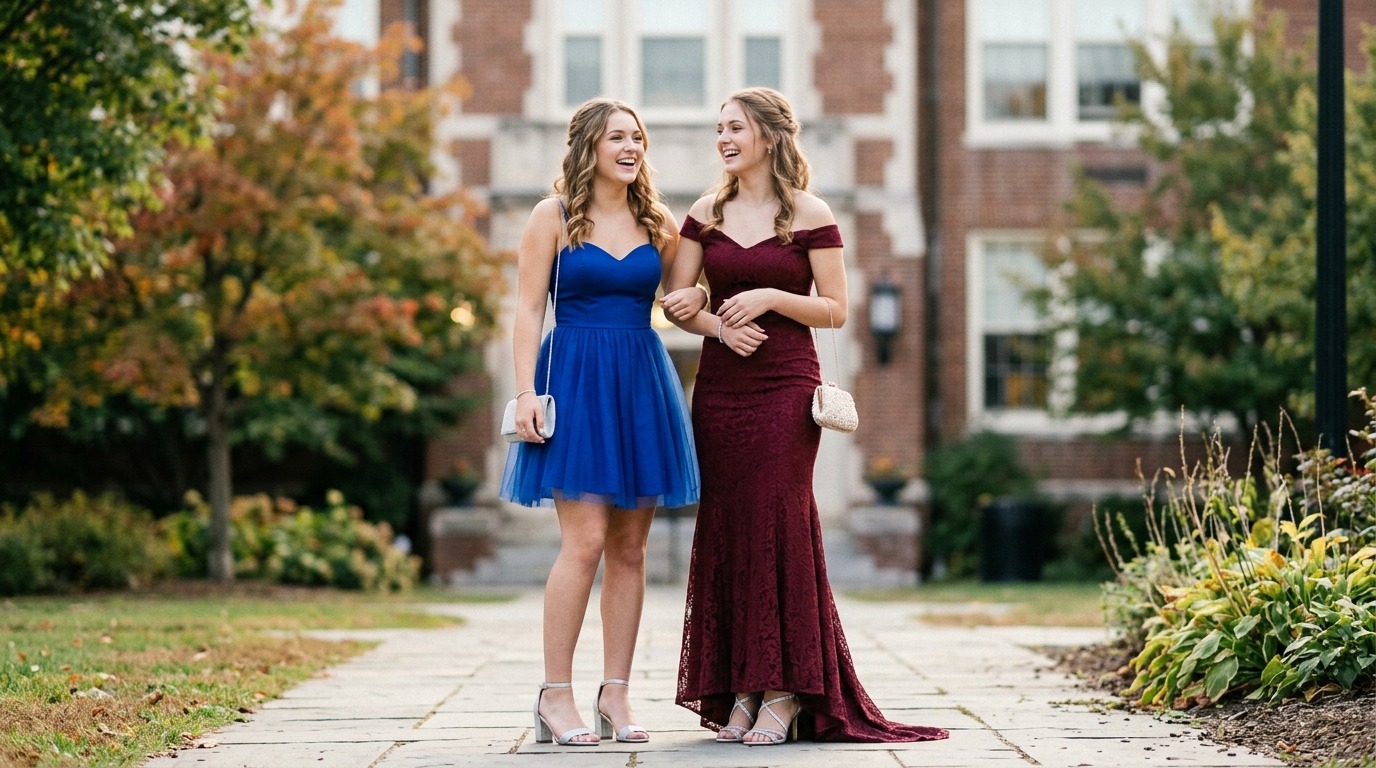
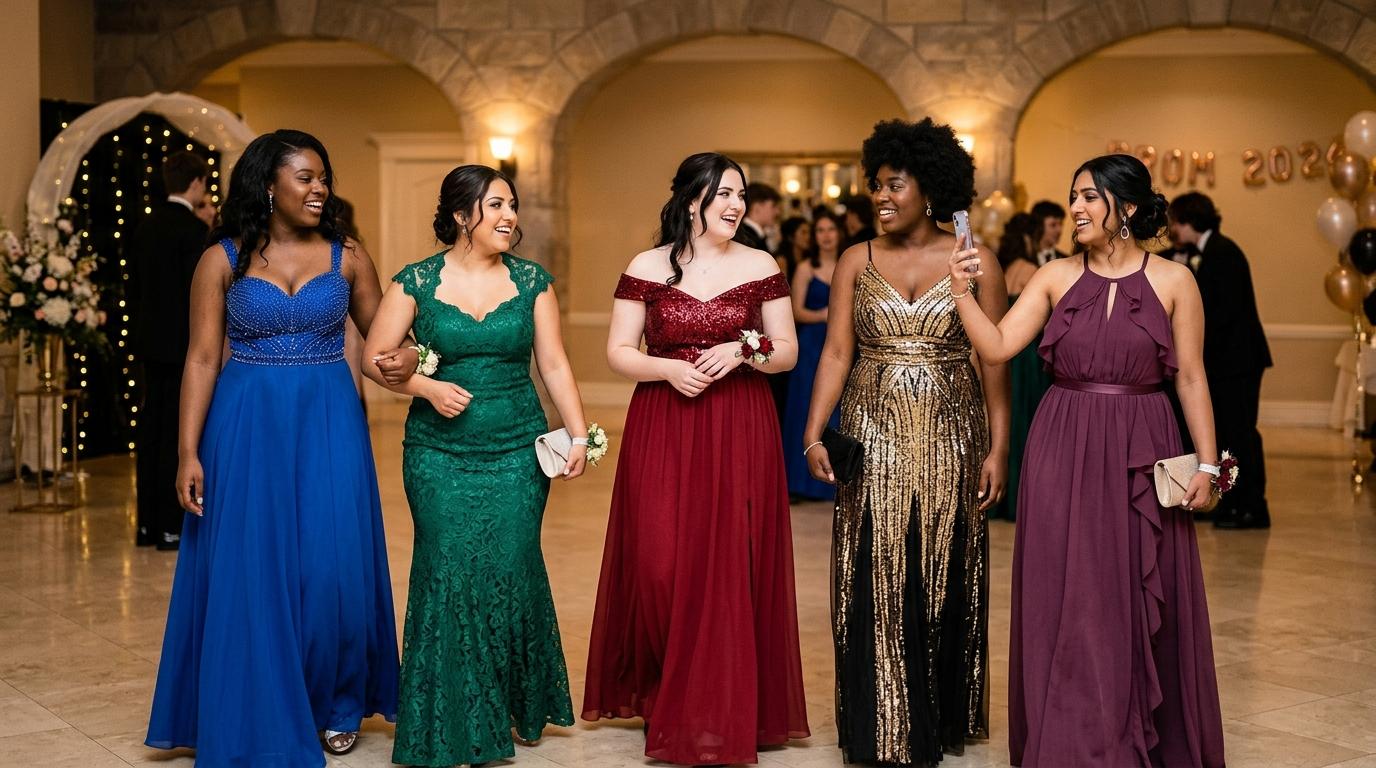
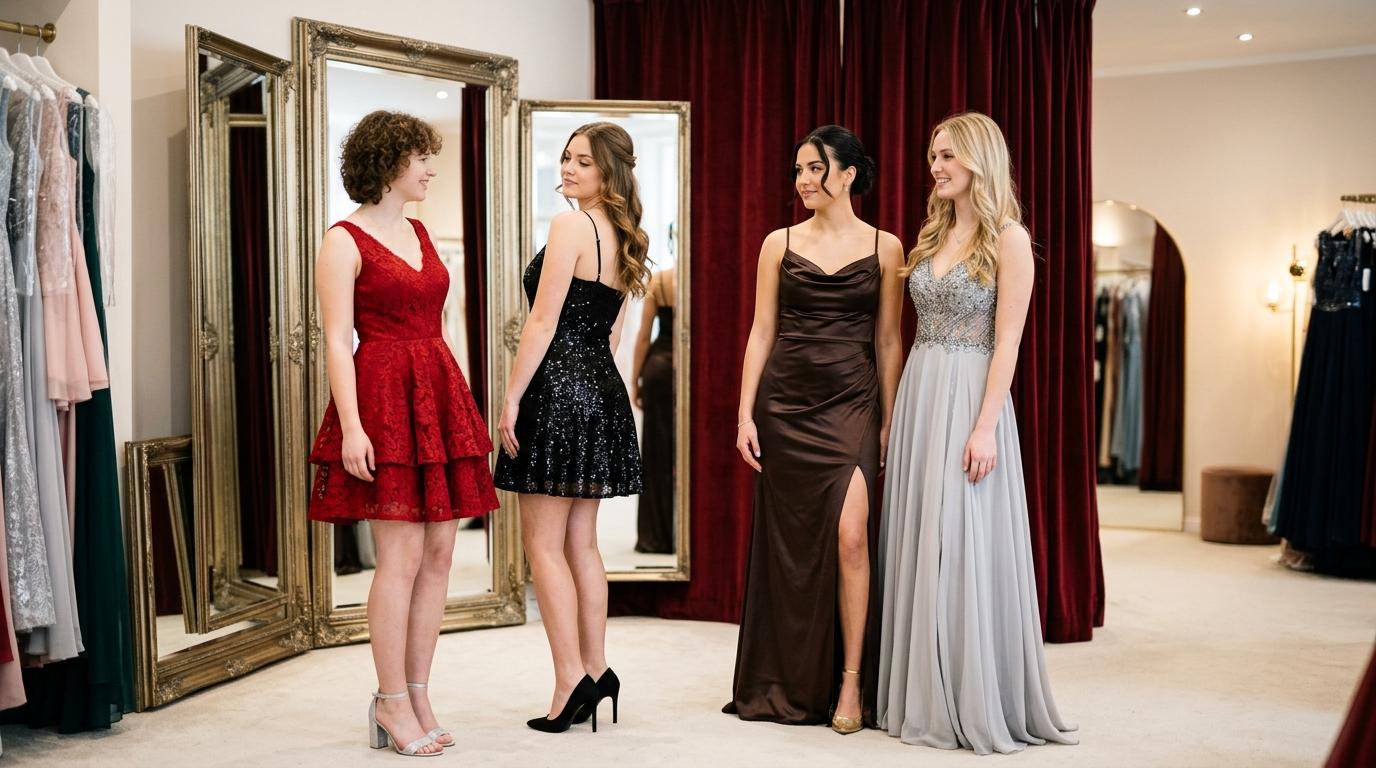
A wedding can have a specific color palette while allowing bridesmaids to wear different dress styles. This approach can make the bridal party look coordinated while giving each person an opportunity to choose a flattering and comfortable design.
The goal is balance: the dresses should clearly belong to the same wedding but should not overpower the bride or compete with the overall decoration.
Start With the Wedding Theme and Color Palette
Before choosing bridesmaid dresses, identify the main visual elements of the wedding.
Ask yourself:
-
What is the overall wedding style?
-
What colors are being used throughout the event?
-
Where is the wedding taking place?
-
What season is it?
-
Is the celebration formal, semi-formal, or casual?
-
What colors will appear in the flowers and decorations?
Once these details are clear, choosing the right bridesmaid color becomes much easier.
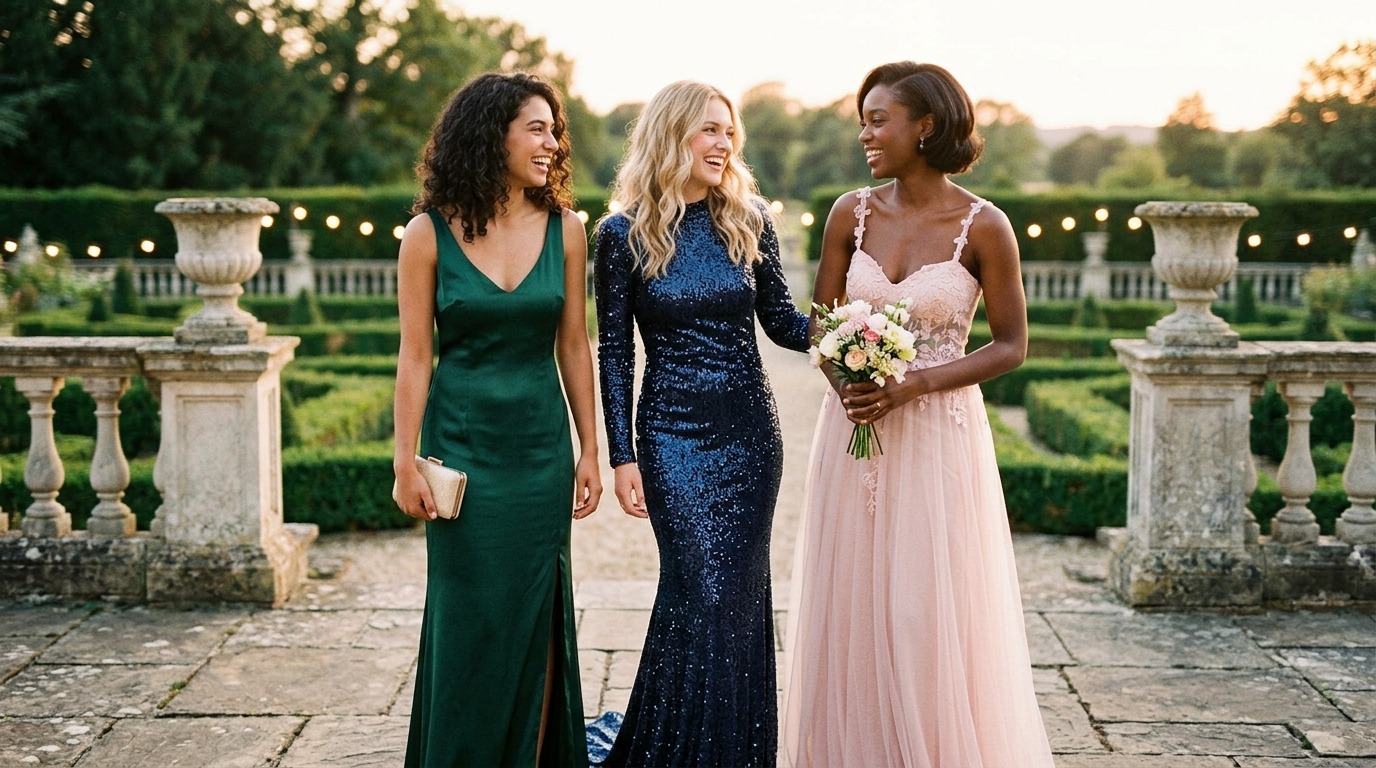
For example, a romantic garden wedding may work well with soft pink, sage green, dusty blue, or lavender. A glamorous ballroom wedding may call for richer colors such as emerald, burgundy, navy, or champagne.
The bridesmaid dresses do not need to exactly match the table linens or flowers. Instead, they should complement the overall palette.
Match Bridesmaid Dresses to the Wedding Style
Different wedding themes naturally call for different dress choices. The silhouette, fabric, color, and level of embellishment should all support the style of the celebration.
Classic and Traditional Weddings
Classic weddings usually have an elegant and timeless appearance. Think structured floral arrangements, traditional venues, clean decorations, and refined details.
For this type of wedding, consider bridesmaid dresses in timeless colors such as navy, burgundy, dusty rose, champagne, or soft blue.
Long gowns often work particularly well for formal traditional weddings. Clean silhouettes such as A-line, column, or gently fitted dresses can create an elegant bridal party look without feeling overly trendy.
Simple accessories and classic hairstyles can complete the appearance.
Romantic Weddings
Romantic weddings often use soft colors, delicate flowers, flowing fabrics, and feminine details.
Bridesmaid dresses in blush, mauve, dusty rose, lavender, light blue, or champagne can complement this style beautifully.
Chiffon, tulle, lace, and soft satin can add movement and texture. Flowing silhouettes can also work well for outdoor ceremonies and romantic venues.
If the wedding uses lots of soft floral details, avoid choosing dresses with excessive embellishment. The goal is to keep the entire look balanced.
Rustic and Barn Weddings
Rustic weddings often feature natural materials, wooden details, greenery, wildflowers, and relaxed decoration.
Earthy colors can work particularly well with this setting. Consider sage, olive, terracotta, dusty blue, taupe, rust, or muted burgundy.
The dress style can also be slightly more relaxed. Flowing fabrics and simple silhouettes can complement a rustic environment better than highly structured or heavily embellished gowns.
The venue should influence your choice. A dress that looks perfect in a formal ballroom may feel out of place at a countryside barn celebration.
Modern and Minimalist Weddings
Modern weddings typically focus on clean lines, simple decoration, and a refined color palette.
Bridesmaid dresses with sleek silhouettes can support this aesthetic. Solid colors such as black, navy, gray, deep green, or muted neutrals can create a sophisticated appearance.
Minimalist does not mean boring. Interesting necklines, elegant draping, satin finishes, or modern silhouettes can add visual interest while keeping the overall look clean.
Beach Weddings
Beach weddings require special attention to fabric, length, and comfort.
Lightweight bridesmaid dresses are usually more practical than heavy fabrics or highly structured gowns. Chiffon, lightweight satin, and other breathable materials can work well in warm weather.
Colors such as dusty blue, seafoam, coral, lavender, sand, and soft pink can complement a coastal setting.
Consider the practical side as well. Dresses should allow bridesmaids to walk comfortably on sand, especially if the ceremony takes place directly on the beach.
Glamorous Weddings
For a glamorous wedding, bridesmaid dresses can include richer fabrics, sophisticated colors, and subtle shine.
Satin, velvet, sequins, and metallic details can work well depending on the season and level of formality.
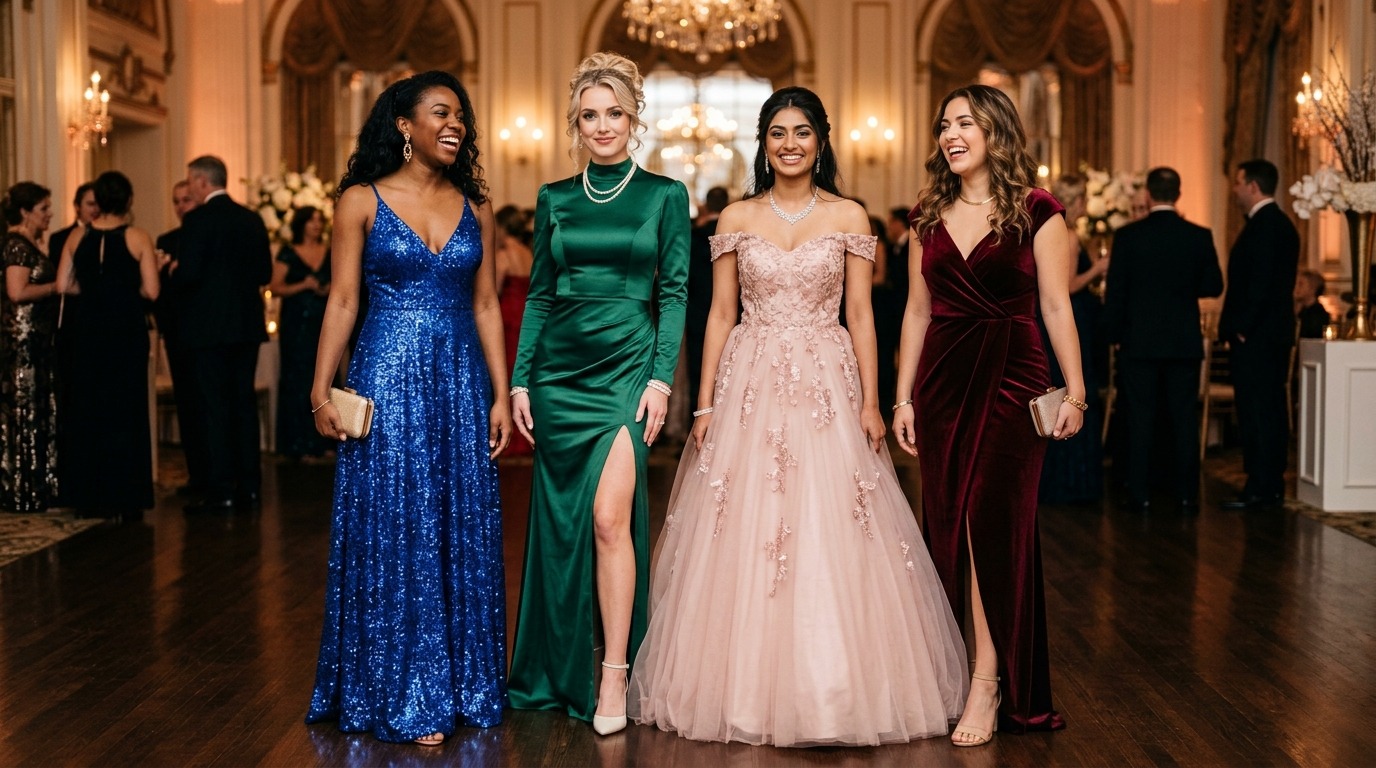
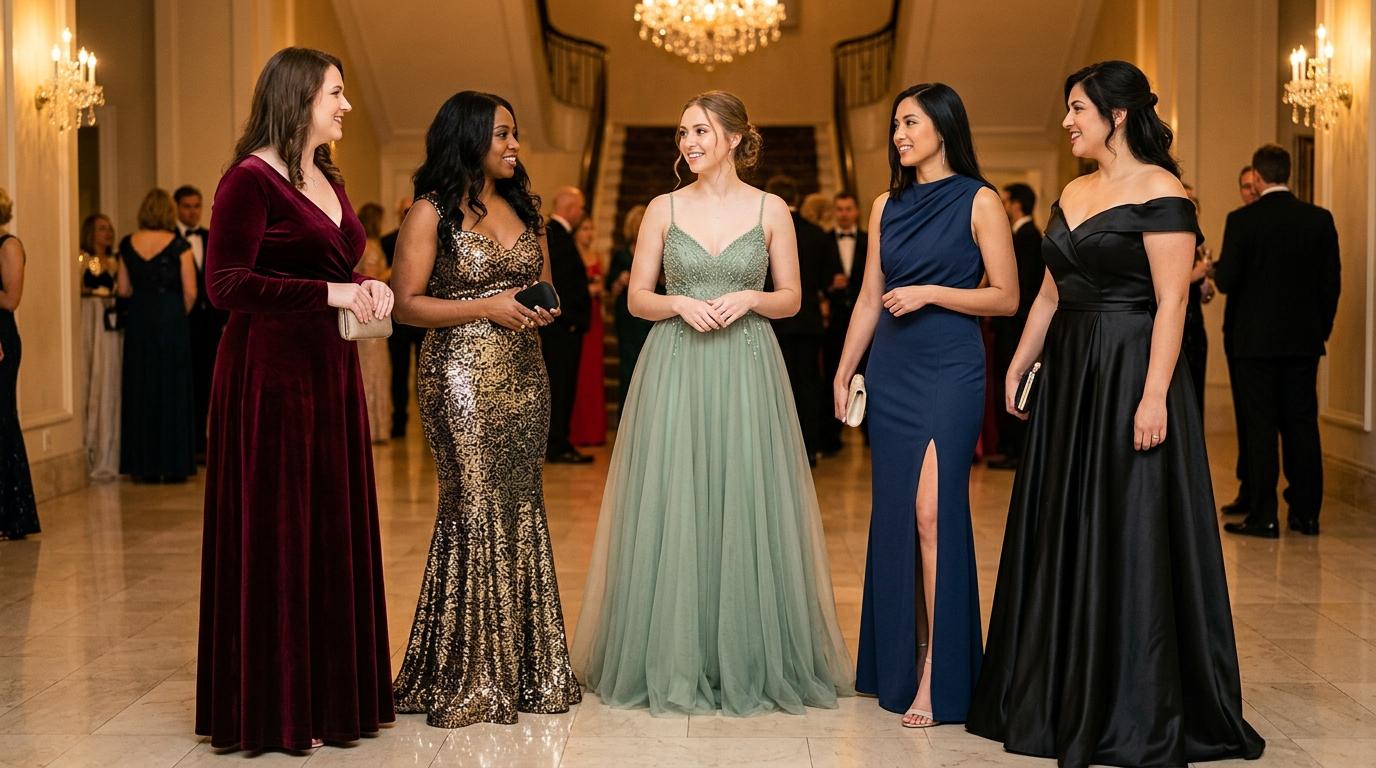
Jewel tones such as emerald, sapphire, burgundy, and deep purple can create a dramatic appearance. Metallic shades such as champagne or silver can also work for evening celebrations.
When choosing glamorous bridesmaid dresses, avoid adding too many competing details. If the dresses are heavily embellished, keep accessories more understated.
Coordinate the Dresses With the Bridal Gown
The bridesmaid dresses should complement the bride’s gown rather than compete with it.
Consider the style and details of the wedding dress. If the bridal gown has a simple and modern design, the bridesmaid dresses can have slightly more texture or color without creating a visual conflict.
If the wedding gown is heavily detailed with lace, beading, embroidery, or crystals, simpler bridesmaid gowns may create a more balanced bridal party.
The color also matters. Pure white or ivory bridesmaid dresses can sometimes look too similar to the bridal gown unless the bride specifically wants an all-white wedding party.
The bride should remain the visual focus while the bridesmaids create a coordinated frame around her.
Choose Colors That Work Together
Color is often the first thing people notice about bridesmaid dresses, but selecting a color is not as simple as picking a favorite shade.
Think about the entire wedding palette.
If the wedding uses three or four main colors, the bridesmaid dresses can use one primary shade while flowers, accessories, and decorations introduce the other colors.
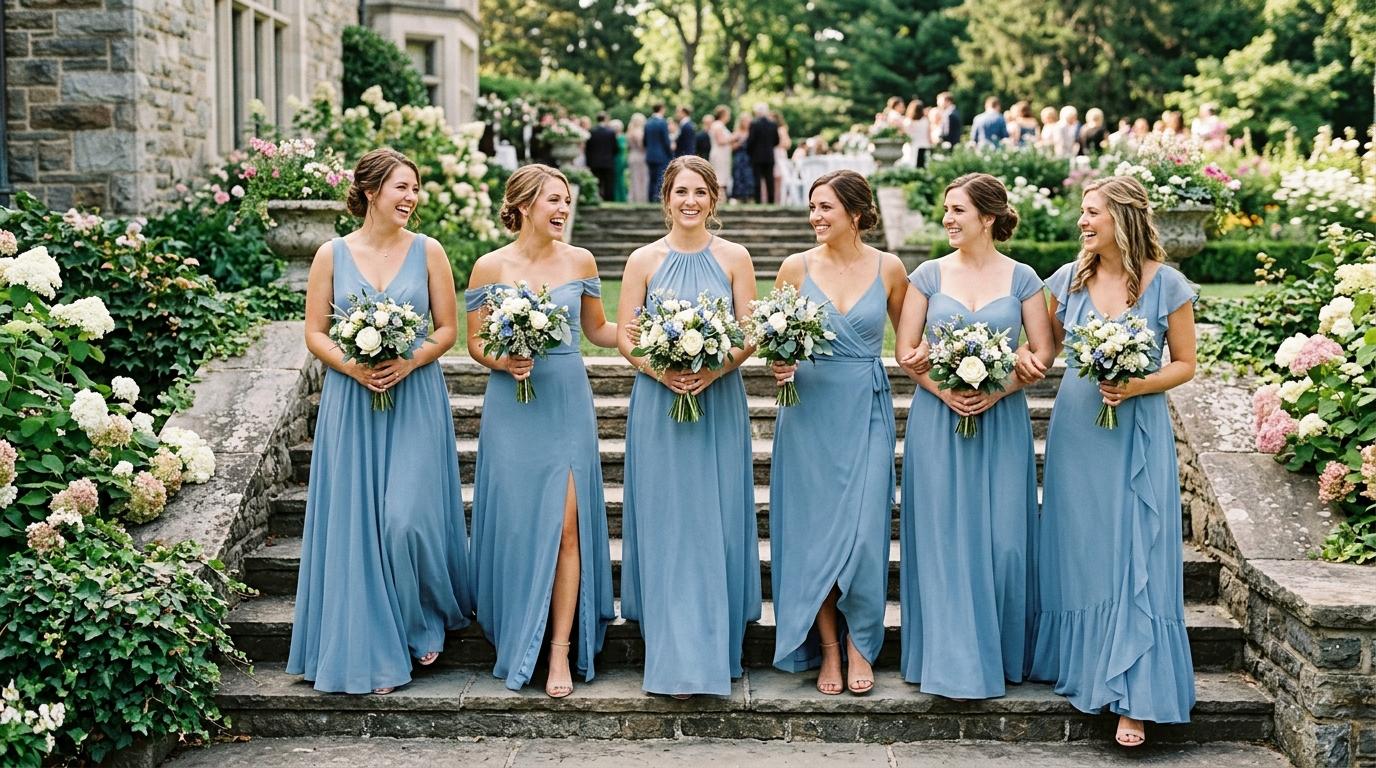
For example, if the wedding palette includes dusty blue, ivory, and greenery, the bridesmaids could wear dusty blue dresses while the flowers and decorations provide the remaining colors.
This creates harmony without making every part of the wedding the exact same color.
Consider Different Shades of the Same Color
One of the easiest ways to create a coordinated but modern bridal party is to use different shades of the same color.
For example, bridesmaids could wear variations of:
-
Blush and dusty rose
-
Light blue and dusty blue
-
Sage and olive
-
Lavender and mauve
-
Champagne and taupe
This approach is especially useful when bridesmaids have different skin tones and style preferences.
Instead of forcing everyone into one exact shade, you can create a cohesive color story with several related tones.
Coordinate the Dress Fabric With the Season
The fabric of bridesmaid dresses should make sense for both the wedding theme and the weather.
For spring and summer weddings, lightweight materials such as chiffon and soft tulle can create an airy appearance. Satin can also work beautifully for formal summer evenings when the fabric and construction are suitable for the temperature.
For fall and winter weddings, richer materials such as velvet and heavier satin can provide warmth and a more luxurious appearance.
Seasonal fabrics can also strengthen the visual theme. A velvet dress in a deep jewel tone can feel naturally suited to a winter wedding, while a flowing pastel chiffon dress may feel more appropriate for a spring celebration.
Choose the Right Dress Length
Dress length should reflect both the wedding style and the venue.
Floor-length bridesmaid gowns are a classic choice for formal weddings and evening celebrations. They create a polished and elegant appearance and work particularly well in ballrooms, hotels, and upscale venues.
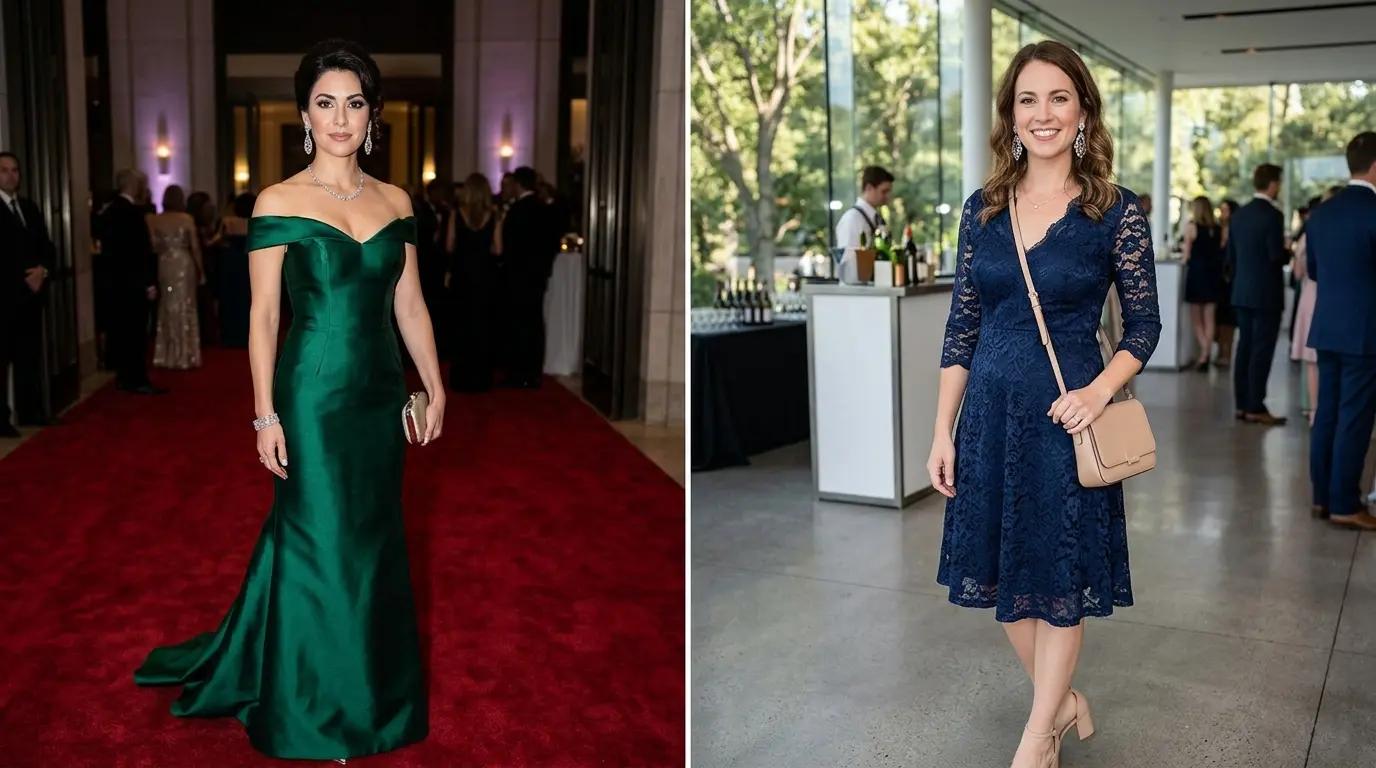
Midi and knee-length bridesmaid dresses can be suitable for less formal celebrations. They can also work well for daytime weddings, cocktail-style receptions, and warm-weather events.
For beach and outdoor weddings, shorter or flowing dresses may provide greater comfort and mobility.
The most important factor is consistency with the dress code. A casual short dress may look out of place at a black-tie wedding, while a highly embellished floor-length gown may feel excessive for a relaxed daytime ceremony.
Consider the Wedding Venue
The venue can tell you a lot about the type of bridesmaid dresses that will work best.
A grand ballroom may call for long formal gowns with elegant fabrics. A garden venue may suit soft colors and flowing silhouettes. A beach ceremony may require lightweight fabrics and comfortable designs.
Think about how the dresses will look against the venue itself.
A color that looks beautiful indoors under warm lighting may appear very different in bright outdoor sunlight. It is useful to view fabric swatches in lighting that is similar to the wedding setting before making the final decision.
Let Bridesmaids Have Some Choice
A coordinated bridal party does not require every bridesmaid to wear exactly the same dress.
Allowing some flexibility can make the experience easier for everyone.
For example, you might choose:
-
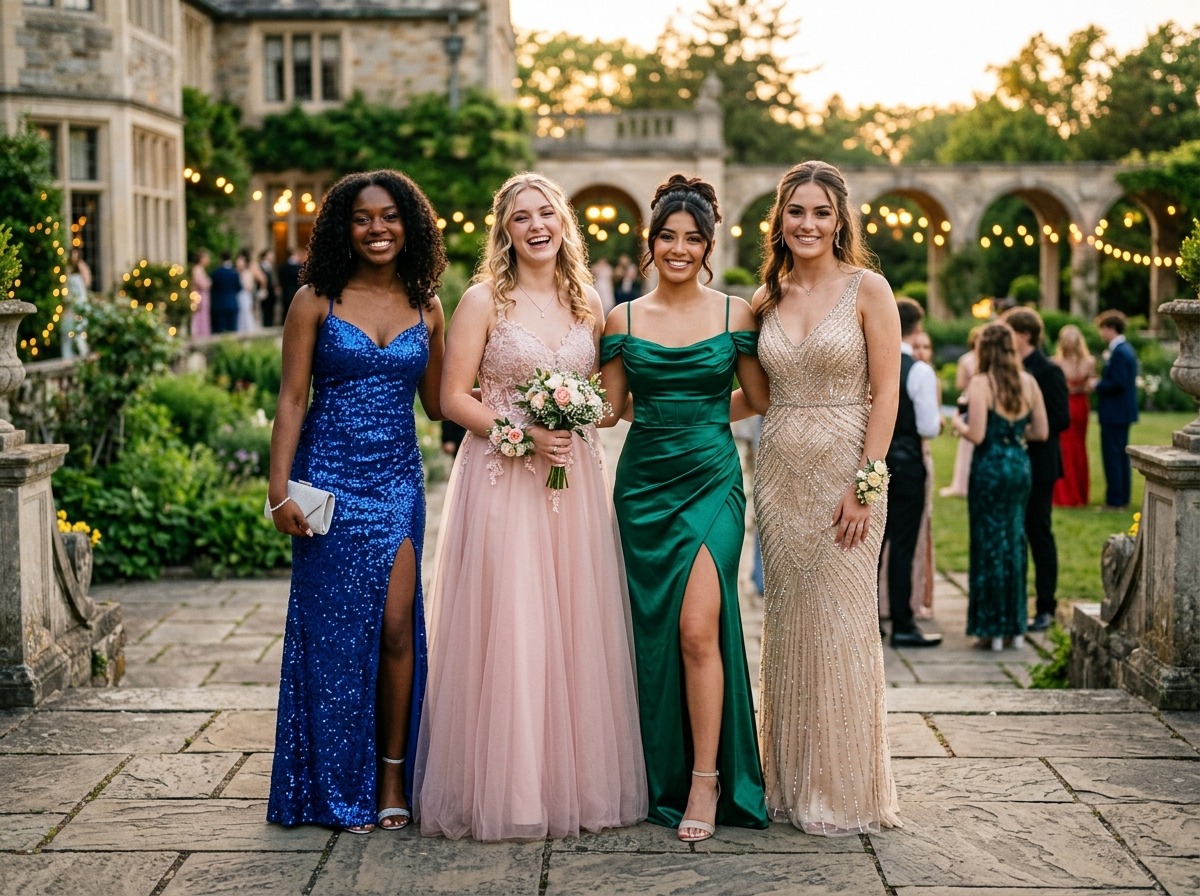
The same color with different silhouettes
-
The same fabric with different necklines
-
Different shades from one color family
-
The same dress in different lengths
-
A specific color palette with approved dress styles
This approach is often called mix-and-match bridesmaid dressing. It allows each bridesmaid to select a style that suits her body shape and comfort level while maintaining a unified appearance.
The key is to establish clear boundaries. Too much freedom can make the bridal party look disconnected, while too many restrictions can make the shopping process frustrating.
Think About Different Body Types
There is no single bridesmaid dress silhouette that flatters everyone.
Some bridesmaids may prefer an A-line shape, while others may feel more comfortable in a fitted, empire-waist, or flowy design.
A-line dresses are popular because they gradually widen from the waist and can work well across different body shapes. Wrap-style designs can also provide flexibility because the fit can be adjusted around the waist.
When choosing bridesmaid dresses, focus on comfort and confidence rather than trying to make everyone look exactly the same.
A coordinated bridal party looks better when each person feels comfortable in what she is wearing.
Coordinate Accessories With the Dresses
Accessories can bring the entire bridal party look together.
Shoes, jewelry, handbags, hair accessories, and wraps can help create consistency even when bridesmaid dresses have different styles.
You do not necessarily need every bridesmaid to wear identical accessories. Instead, establish a general direction.
For example, everyone might wear:
-
Neutral or metallic shoes
-
Similar jewelry
-
Matching hair accessories
-
The same style of shawl or wrap
-
Coordinated bouquets
Keep the accessories appropriate to the wedding theme. Minimal jewelry can complement a modern wedding, while vintage-inspired accessories may work better for a classic or romantic celebration.
Think About the Wedding Photos
Bridesmaid dresses will appear in wedding photos for years, so consider how the colors and styles will photograph.
Very bright colors can dominate group photos, while extremely pale shades may blend into light backgrounds.
Patterns can also create a less unified appearance if every bridesmaid wears something different.
Solid colors or carefully coordinated shades are usually easier to photograph as a group.
You should also consider how the dresses will look next to the bride, groom, flowers, and wedding party. The goal is to create visual balance rather than having one element dominate every picture.
Common Mistakes to Avoid
Choosing bridesmaid attire becomes easier when you know what can go wrong.
Choosing the Color Too Early
Do not select the bridesmaid color before considering the flowers, venue, season, and wedding theme. The dress color should be part of the overall palette.
Prioritizing Trends Over the Wedding Style
A popular dress style may not fit every wedding. Choose trends carefully and make sure they support the overall aesthetic.
Ignoring Comfort
Bridesmaids may wear their dresses for many hours. Consider temperature, fabric, fit, movement, and the length of the event.
Making Everyone Wear the Same Silhouette
Identical dresses can work, but they are not always the best option. Different silhouettes in the same color can create a more flattering and modern result.
Choosing Dresses That Compete With the Bride
The bridesmaid dresses should enhance the bridal look rather than draw attention away from it.
When Should You Order Bridesmaid Dresses?
It is wise to begin the process well before the wedding. Bridesmaid dresses may require time for selection, ordering, shipping, alterations, and last-minute adjustments.
Starting several months ahead gives the bridal party enough time to compare styles, confirm sizes, order dresses, and schedule alterations.
Do not wait until the final weeks before the wedding. Even when dresses are available off the rack, alterations and unexpected delivery delays can create unnecessary stress.
How Mayqueen USA Can Help You Find the Right Style
Finding the right bridesmaid dresses is easier when you have access to different silhouettes, lengths, colors, fabrics, and formal styles.
Mayqueen USA offers a range of special occasion dresses that can be considered for weddings and other formal events. When shopping, compare the dress style with your wedding theme, venue, season, and desired level of formality rather than choosing based only on appearance.
It can also help to compare several silhouettes before making a final decision. A dress that looks beautiful on a model may fit differently depending on body shape, height, and personal preference.
Final Tips for Coordinating Bridesmaid Dresses
The best bridesmaid dresses should feel like a natural part of the wedding rather than a separate styling decision.
Start with the wedding theme and color palette, then consider the venue, season, formality, bridal gown, flowers, and photography. From there, choose fabrics, silhouettes, and accessories that create a balanced appearance.
Remember that coordination does not require complete uniformity. Different dress styles, shades, or necklines can create a beautiful bridal party look while allowing each bridesmaid to feel confident and comfortable.
Most importantly, choose dresses that support the mood of the celebration. Whether the wedding is romantic, rustic, modern, glamorous, or beach-inspired, thoughtfully selected bridesmaid dresses can bring the entire wedding design together and create a polished look that photographs beautifully.